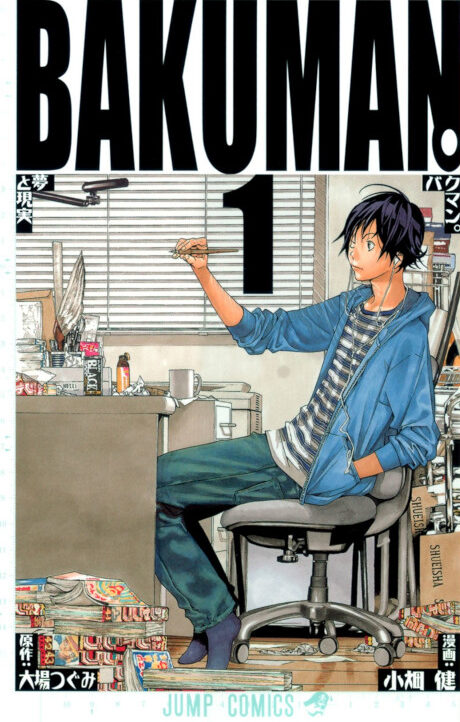
Bakuman
Bakuman — Quick Overview
| Start Chapter 1 | Latest Chapter |
| Overview Story Characters FAQ | Chapters ↓ |
★ 8.1/10 · AniList Manga Comedy Drawing Work Meta Shounen Completed
Bakuman (バクマン。) is a completed meta-shounen manga created by writer OHBA Tsugumi and illustrator OBATA Takeshi, serialized by MANGA Plus, Shueisha. Follow aspiring artist Moritaka Mashiro and story genius Akito Takagi as they battle unforgiving weekly reader surveys to secure a serialized hit. Read the complete 176-chapter catalog from Chapter 1 through the final installment.
| Author / Story : OHBA Tsugumi | Format & Status : Manga · Completed |
| Artist / Art : OBATA Takeshi | Original Publisher : MANGA Plus, Shueisha |
Series Specifications (Year, Genres, Origin...)View all details ↓
| Release Year : 2008 | Demographic : Shounen |
| Country of Origin : Japan | Reading Style : Right to Left |
| Primary Genres : Comedy, Drama, Romance, School Life, Slice of Life | |
| Core System / Theme : Manga Industry Serialization, Editorial Meetings, Reader Survey Rankings, Creative Partnership | |
Other Names & Verified AliasesView all
Baku-man • Bakuman • Bakuman - Giấc mơ họa sĩ truyện tranh • Bakuman。 • Бакуман. • बाकुमान • วัยซนคนการ์ตูน • バクマン。 • 爆漫-夢與現實 Baku Man • 爆漫王。 • 食夢者 • 食梦者
Full Synopsis & Narrative BreakdownRead story
Middle schooler Moritaka Mashiro possesses exceptional drawing talent but harbors no ambition for the future, haunted by the untimely death of his uncle, a professional mangaka who died from overwork. Everything changes when top student Akito Takagi discovers Mashiro's sketchbook containing a portrait of his classmate, Miho Azuki. Takagi proposes a bold creative partnership: Takagi will write original story concepts while Mashiro illustrates them, setting their sights on serialization in Japan's most competitive publication, Weekly Shonen Jump.
The stakes escalate when Mashiro discovers that Azuki dreams of becoming a voice actress. In a moment of sheer determination, they make a mutual pact: marry each other once their manga receives an anime adaptation featuring Azuki in the lead voice role, agreeing not to meet in person until their goals are realized. Operating under the joint pen name Ashirogi Muto, Mashiro and Takagi face the unforgiving reality of editor meetings, rough name submissions, cutthroat serialization meetings, and relentless reader survey rankings.
Their primary hurdle arrives in the form of Eiji Nizuma, an eccentric high school drawing prodigy whose untamed talent immediately crowns him as Jump's golden rookie. To survive against Nizuma and veteran storytellers, Ashirogi Muto must iterate through diverse genres, pivot from dark detective thrillers to mainstream action comedies, manage brutal weekly deadlines, and outmaneuver cancellation thresholds before exhaustion threatens their dream.
What to Expect
Bakuman presents the commercial manga publishing industry with granular procedural authenticity. Rather than relying on supernatural tropes, the narrative treats writing drafts, inking tools, manuscript drop-offs, and editorial feedback as tactical battlegrounds. Tension stems from reader questionnaire postcards, ranking fluctuations, and sudden cancellation notices. Pacing remains rapid across its 176 chapters, charting Mashiro and Takagi's evolution through junior high, high school, and adult studio management while balancing romantic discipline and rivalries against peer creators.
Who Will Enjoy This
This manga appeals to readers fascinated by procedural creative workflows, high-stakes professional rivalries, and methodical skill acquisition. Enthusiasts of sports and tactical progression will appreciate the series' analytical breakdown of storytelling formulas, survey data manipulation, and artistic endurance.
Readers who connect with the disciplined technical training and competitive calculations in Bakuman will also appreciate Baby Steps, which breaks down competitive tennis through meticulous note-taking, strategy, and continuous physical self-correction. Similarly, those who enjoy high-pressure team dynamics, weekly roster battles, and unyielding ambition will find strong narrative parallels in Ace of the Diamond, where athletes constantly compete against rivals and teammates to retain their starting positions on the field.
Key Early Characters (Moritaka Mashiro, Akito Takagi, Miho Azuki, Eiji Nizuma)View cast
| Moritaka Mashiro | Role: Artist of Ashirogi Muto Skill: Exceptional line work, speed inking, panel layout execution Motivation: Earn a successful serialized manga and an anime adaptation to marry Miho Azuki while proving his late uncle's profession was noble. |
| Akito Takagi | Role: Story Writer of Ashirogi Muto Skill: Complex plotting, psychological twists, non-standard battle concepts Motivation: Defy familial expectations of becoming a standard salaryman by establishing himself as a top professional manga writer. |
| Miho Azuki | Role: Mashiro's Classmate & Fiancée by Promise Skill: Vocal projection, voice acting auditions, character acting Motivation: Become a recognized professional voice actress to voice the female lead in Ashirogi Muto's eventual anime adaptation. |
| Eiji Nizuma | Role: Chief Rival & Fellow Rookie Mangaka Skill: Intuitive storytelling, blistering drafting speed, raw dynamic action art Motivation: Draw engaging manga non-stop and retain Jump's number one survey ranking while pushing Ashirogi Muto to their absolute limits. |
Frequently Asked Questions3 Answers
Where does the Bakuman anime end in the manga?
The three anime seasons adapt all 176 chapters of the Bakuman manga. However, reading the manga from Chapter 1 offers extensive industry trivia, unadapted editorial mechanics, and detailed double-page spreads by Takeshi Obata that were condensed or altered for the television broadcast.
How many chapters and volumes are in the Bakuman manga?
Bakuman consists of exactly 176 serialized chapters compiled across 20 tankobon volumes. Originally serialized in Shueisha's Weekly Shonen Jump between 2008 and 2012, the entire storyline is fully concluded with no uncollected main canon chapters, making it a complete, self-contained read.
Is Bakuman based on a light novel or an original manga?
Bakuman is an original manga series created by writer Tsugumi Ohba and illustrator Takeshi Obata. It is not adapted from a light novel or web novel, though spin-off light novels and fictional manga-within-manga one-shots were published following its serialization run.
176 Chapters